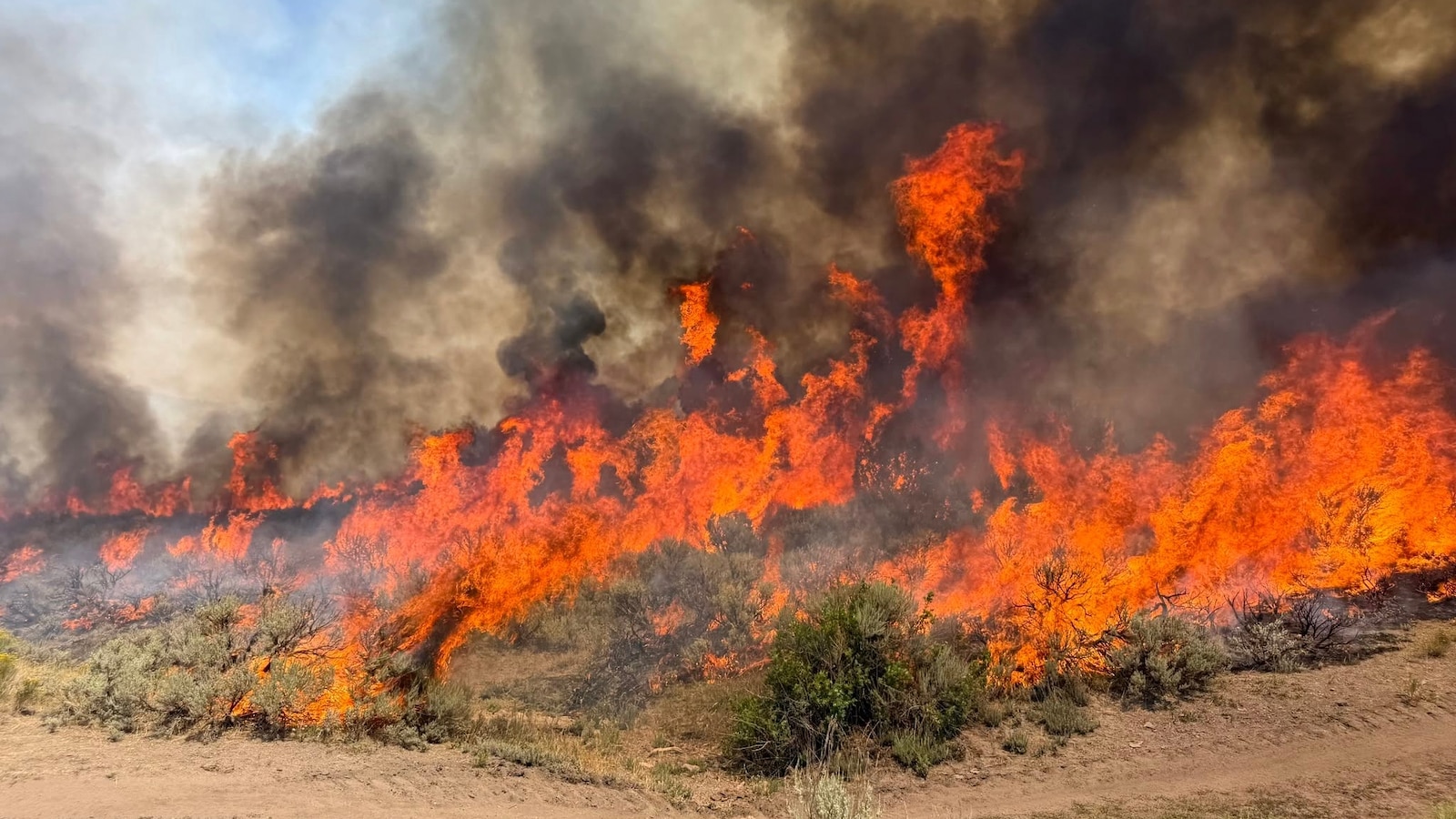
A pilot and crewmember were killed Friday when a heavy-lift helicopter engaged in firefighting operations crashed near the Widemouth 2 Fire in central Utah, officials said, marking one of the deadliest days for wildland firefighting crews this summer. The same week, an uncontained wildfire in south-central Oregon killed a bulldozer operator, underscoring the extreme dangers facing firefighting personnel across the West this fire season.
The National Interagency Fire Center confirmed Saturday that both people aboard the Sikorsky S-64 helicopter, commonly known as a Skycrane, died in the crash. Their names and ages had not been released as of Saturday. The Federal Aviation Administration said the helicopter went down around 10 a.m. Friday near Richfield, Utah, roughly 160 miles south of Salt Lake City.
Crash Details And Response
According to the Sevier County Sheriff's Office, the crash occurred in the Three Creeks Reservoir area, southwest of Richfield near the southeast end of the Widemouth 2 Fire. A witness told KSL News they saw smoke rising from the area shortly after a helicopter had flown over that morning, and photos showed a plume above a nearby hill.
Sevier County Sheriff Nathan Curtis said fire activity had overrun the crash site, cutting off any safe escape routes for responders who might have been sent in. "We didn't want to put them at bigger risk," Curtis said, according to ABC News. "We'll get them in there as soon as we can." Both the sheriff's office and KUTV reported that officials coordinated with fire incident command to determine when it would be safe to access the wreckage, and the crash itself ignited a new spot fire in the area.
Tyler Hecht, deputy incident commander for the Great Basin Incident Management Team, told reporters that conditions were good enough for aircraft to be flying at the time of the crash and that he did not know how long the helicopter had been airborne beforehand, ABC News reported. Hecht said the mood at the fire camp had turned somber, and his voice reportedly cracked at times as he spoke, according to KSL News. Firefighting operations were briefly paused after the crash but resumed later Friday.

"We have a mission to focus on," a deputy incident manager told KUTV. "We're going to continue fighting fire and trying to protect those communities out there and at the same time take care of our responders." Hecht echoed that sentiment to KSL News, saying, "It's not going to change how we operate. We're going to continue to fight fire and utilize aircraft to support our firefighters on the ground."
The Sikorsky S-64 is a heavy-lift helicopter widely used in commercial and government firefighting operations, capable of carrying tanks or buckets to drop water or retardant on wildfires, according to Siller Helicopters as cited by KSL News. Seven helicopters, 23 engines, nine dozers, nine water tenders and 632 total personnel were assigned to the Widemouth 2 Fire on Friday, KSL News reported.
The FAA and National Transportation Safety Board will investigate the crash, though both agencies may face delays reaching the wreckage if the wildfire continues burning nearby. Utah Gov. Spencer Cox issued a statement calling wildland firefighting "among the most dangerous jobs in the world" and asked residents to keep the crew in their prayers while giving investigators time and space to work.
Widemouth 2 Fire Grows To State's Largest
The Widemouth 2 Fire started from a lightning strike on July 27 within the Fishlake National Forest near Kanosh in Millard County. It had grown relatively contained until hot, dry and windy conditions returned to the region over the past week, causing it to spike dramatically, according to KSL News. By Friday, the fire had burned 114,685 acres, surpassing the Babylon Fire, which had burned more than 107,000 acres in San Juan County, to become Utah's largest wildfire of the 2026 season. ABC News reported the fire was 19% contained by Friday morning, had destroyed at least six structures, and had triggered evacuations as it burned through timber, brush and grass on the Fishlake National Forest.
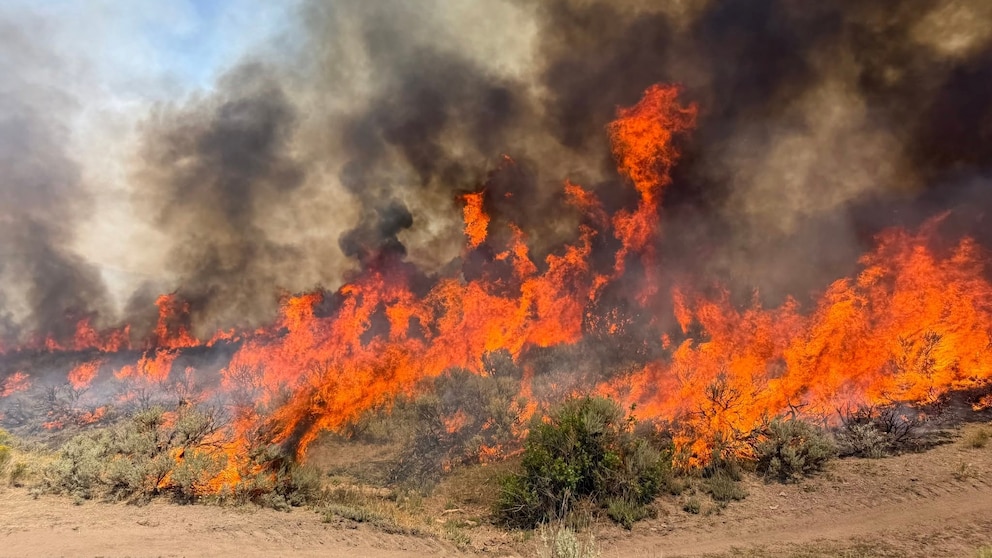
Fire crews were warned Friday morning of erratic winds, dry fuels, hot temperatures and the potential for dry lightning, with red flag warnings in effect across the area, ABC News reported. Officials said months of dry weather, a record lack of snowpack in some areas, hot spells and erratic winds have contributed to worsening fire conditions across Utah and other parts of the West this year.
Deadly Oregon Fire And A Dangerous Season
In Oregon, 47-year-old Jason Ensign died Thursday while operating a bulldozer for a timber company battling the Wrights Spring Fire, according to ABC News. The fire, which started Wednesday east of the town of Chiloquin in south-central Oregon, escalated with what the local sheriff's department described as "unexpected and rapid growth," cutting off Ensign's escape route. By Friday, the fire had burned nearly 14 square miles with no containment, according to the U.S. Forest Service, with extremely hot and dry weather driving erratic fire behavior.
The deaths this week add to a summer already marked by tragedy for wildland firefighting crews. Four firefighters were killed and a fifth injured in June after being overcome by a fast-moving wildfire near the Utah-Colorado border while battling the Knowles and Gore fires, KSL News reported. The crew attempted to shield themselves using emergency fire shelters as flames overran their position. Three were pronounced dead at the scene, while a fourth died in July, weeks after the incident.
What Happens Next
Investigators from the FAA and NTSB are expected to lead the inquiry into what caused the Utah helicopter crash once fire conditions allow safe access to the site. Meanwhile, firefighting crews on both the Widemouth 2 and Wrights Spring fires continue working to establish containment amid ongoing hot, dry and windy conditions across the West. Officials in Utah say the incident has not altered their strategy, with aircraft support remaining a key part of ground operations even as crews mourn the loss of colleagues in an already dangerous fire season.


