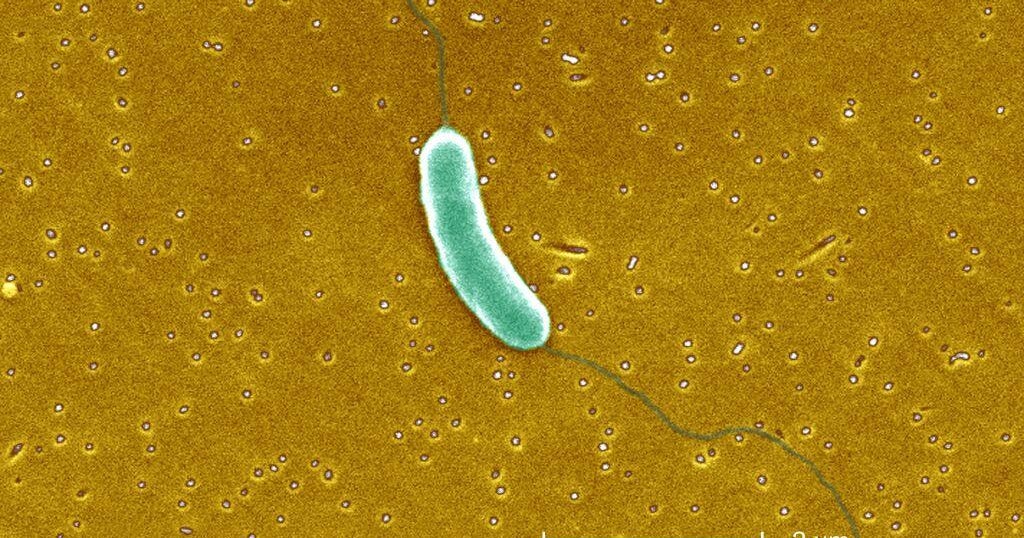
Candida auris, a drug-resistant fungus that spreads easily in hospitals and nursing homes, has now been detected in 27 states this year, according to data from the Centers for Disease Control and Prevention cited by ABC News and CNN. As of the week ending July 25, the CDC recorded 3,437 clinical cases of C. auris nationwide, meaning cases where a symptomatic patient tested positive. That figure is running slightly behind last year's pace, when 4,290 clinical cases had been reported by the same point, ABC News reported.
California has logged the most clinical cases so far this year with 873, followed by Texas with 433 and Tennessee with 283, per the CDC data cited by ABC News. Fox 7 Austin, drawing on the same CDC dataset alongside figures from the Texas Department of State Health Services, reported a broader national total of 6,669 cases as of July 25 once both clinical and screening cases are combined — screening cases being people who test positive but show no symptoms, a status known as colonization. That combined national count is also down from the same point last year, when 7,779 cases had been reported.
The two ways of counting explain why Texas can appear to lead the country in one tally and trail California in another. Fox 7 Austin reported that Texas recorded 715 screening cases and 433 clinical cases as of July 25, for a combined 1,148 — the most of any state when both categories are counted together. California, by contrast, reported 873 clinical cases and no screening cases at all, according to the CDC data. By the following Wednesday, the Texas Department of State Health Services had updated its own count to 438 clinical cases and 743 screening cases, Fox 7 Austin reported, underscoring how quickly the numbers shift as testing continues.
A Yeast That Lingers On Doorknobs And Bed Rails
C. auris is a type of yeast, not a bacterium or virus, and it behaves differently from many other hospital pathogens. Dr. Graham Snyder, medical director of infection prevention and hospital epidemiology at the University of Pittsburgh Medical Center, told CNN that the fungus is unusually good at persisting in the environment and resisting standard cleaning products, which is why healthcare workers pay close attention to disinfecting rooms once a case is identified. The CDC notes the fungus can survive for extended periods on surfaces such as doorknobs and bedrails, and it can spread both from symptomatic patients and from people who carry it on their skin without ever feeling sick.

Dr. Scott Roberts, an associate professor of infection prevention at Yale University, told CNN there are two distinct ways a person can carry C. auris. The first is colonization, when the fungus sits on the skin — often detected through a swab of the armpit or groin — without causing illness in most cases. The second is true infection, which happens when the fungus enters the body through a break in the skin, frequently leading to bloodstream infections. "There's some entry into the skin somewhere; maybe your immune system's not as good as it should be. You can't fight it off, and you lead to a big infection," Roberts said.
Dr. Ilan Schwartz, an associate professor of medicine at Duke University, told CNN that once C. auris reaches the bloodstream it can trigger fever, low blood pressure, a racing heart rate and sepsis, a life-threatening response to infection. Because the fungus spreads mainly in healthcare settings, Schwartz said it primarily threatens people who already have other health problems, such as those undergoing chemotherapy, recovering from surgery or taking antibiotics. He added that hospitalized patients are typically already being monitored closely enough that medical staff would catch warning signs, so he does not believe individual members of the public need to be especially vigilant.
Who Faces The Highest Risk
The CDC and outside experts agree that most healthy people have little reason to worry about C. auris. The danger concentrates among people who are immunocompromised, elderly patients in nursing homes, and hospital patients who have had invasive medical devices such as catheters, feeding tubes, central venous lines or breathing tubes, according to the CDC and the Cleveland Clinic, as cited by Fox 7 Austin. Long hospital stays or extended time in long-term care facilities also raise the risk of exposure.

Treatment is complicated by drug resistance. A CDC analysis of more than 8,000 C. auris samples collected in 2022 and 2023 found that over 95% were resistant to fluconazole, typically a first-line antifungal drug, ABC News reported. About 15% resisted amphotericin B, roughly 1% resisted the echinocandin class of antifungals, and fewer than 1% resisted all three drug classes at once. Echinocandins remain the most reliable treatment option for most infections, according to the CDC. Because studies remain limited, the CDC estimates the mortality rate associated with C. auris infections falls somewhere between 30% and 60%, though the agency cautions that most patients who contract it were already seriously ill, making it hard to isolate how much the fungus itself contributed to any given death.
Dr. Nitipong Permpalung, director of mycology research at Johns Hopkins University, told CNN that part of this year's elevated case counts likely reflects expanded screening efforts that are now better at distinguishing colonized patients from those with active clinical infections, rather than a simple surge in disease spread. "We need to understand that this is a positive screening test, and this is a clinical case, and go from there," Permpalung said, while acknowledging the broader concern and calling for more research to improve care.
Roberts told CNN that facilities vary widely in their ability to detect the fungus in the first place. "I just have low confidence every facility can do that, or even right now we don't even know how big a problem it is because a lot of places are not testing for this or don't have the lab capability to even identify it," he said. His practical advice for patients or families who learn someone has tested positive is straightforward: notify others who live with or care for that person, wash hands frequently, and avoid sharing medical equipment before it has been disinfected. The CDC likewise recommends handwashing, alcohol-based hand sanitizers, isolating infected patients, and the use of gloves, gowns and specialized disinfectants by caregivers to limit further spread.