Billionaire investor Bill Ackman says every one of the roughly 48 employees at his hedge fund Pershing Square Capital Management, from janitorial staff to receptionists, owns millions of dollars worth of company stock, according to Yahoo Finance and Fortune. The disclosure came during an interview with Fortune editor-in-chief Alyson Shontell on the outlet's Titans and Disruptors of Industry podcast, in which Ackman laid out how the roughly $35 billion firm has managed to retain every employee it wants to keep.
Broad Ownership Across the Firm
"There's not a person at Pershing Square that doesn't own multiple millions of dollars of stock in the company whether you're cleaning the space or at the front desk or another role in the company," Ackman told Fortune. "We believe in taking care of our people." Pershing Square, which Ackman describes as having had zero "undesired departures," pairs that ownership stake with workplace perks that are unusual for Wall Street, according to Fortune and Yahoo Finance. Employees are required to work from the office five days a week for ten months of the year, but during July and August the policy loosens considerably, with the firm's investment team relocating together to the Hamptons, working from homes they rent or own.
The firm also invests in employee wellbeing more broadly, offering healthy meals in its cafeteria, gym access, and comprehensive healthcare benefits, Ackman said. "We look after people, and so that when you operate that way, people don't think about going anyplace else," he told Fortune. Ackman also credited the firm's culture to deliberate hiring choices, saying he looks for "people of the highest character, human qualities, people you want to hang out with, spend time with," and that combining top talent with strong character creates the foundation for a productive workplace.
From Gotham Partners to a $35 Billion Firm
Ackman, who grew up in New York, graduated from Harvard with a bachelor's degree in 1988 and an MBA in 1992, according to Fortune. That same year he co-founded Gotham Partners with fellow Harvard graduate David P. Berkowitz, an investment firm that later collapsed in part due to failed bets on private companies. In 2004, Ackman launched Pershing Square Capital Management, which grew into one of Wall Street's most closely watched activist hedge funds, building major stakes over the years in companies including Chipotle, Universal Music Group, and J.C. Penney. The firm went public on the Amsterdam Stock Exchange in 2014.
Capitalism Versus Philanthropy
Beyond his comments on workplace culture, Ackman used the same Fortune interview to argue that running a great company can do more good for society than traditional philanthropy. "I've spent a fair amount of time on philanthropy, and it's vastly less efficient at solving problems than capitalism," he said, adding that nonprofits lack the equity incentives and market discipline that keep businesses sharp and can be "taken over" and redirected toward political goals rather than their founding missions. Ackman estimated he has spent close to two decades and nearly $1 billion on philanthropic giving.
His position echoes comments Amazon founder Jeff Bezos made on CNBC's Squawk Box in May, when Bezos said that if he does his job right, the societal value created by his for-profit companies will exceed the good done through his charitable giving. Fortune noted that the framing has become a common talking point among major capital allocators, though it also draws criticism for allowing wealthy executives to claim credit for jobs and innovation as social contributions without accounting for the market effects, on housing, labor, and industry concentration, that their companies have also helped create.
Ackman is not abandoning giving altogether but says he is trying to redesign it. His newest project, the Brain Research Rehabilitation Institute, is funded with nonprofit capital but structured to spin out for-profit ventures, including devices, molecules, and treatments for brain injury and stroke patients, with equity shared among the institute's staff in a structure that mirrors Pershing Square's compensation model, Fortune reported. Ackman told Fortune's Jeff John Roberts that the effort was shaped in part by his daughter Lucy's brain hemorrhage in February, which reoriented his philanthropic focus toward neuroscience. He said the model captures access to researchers and institutions that will only partner with nonprofits while still applying market discipline. Notably, Fortune reported that Ackman closed on the building that will house the institute the same day he made his case that capitalism outperforms philanthropy.
Criticism of New York City Housing Policy
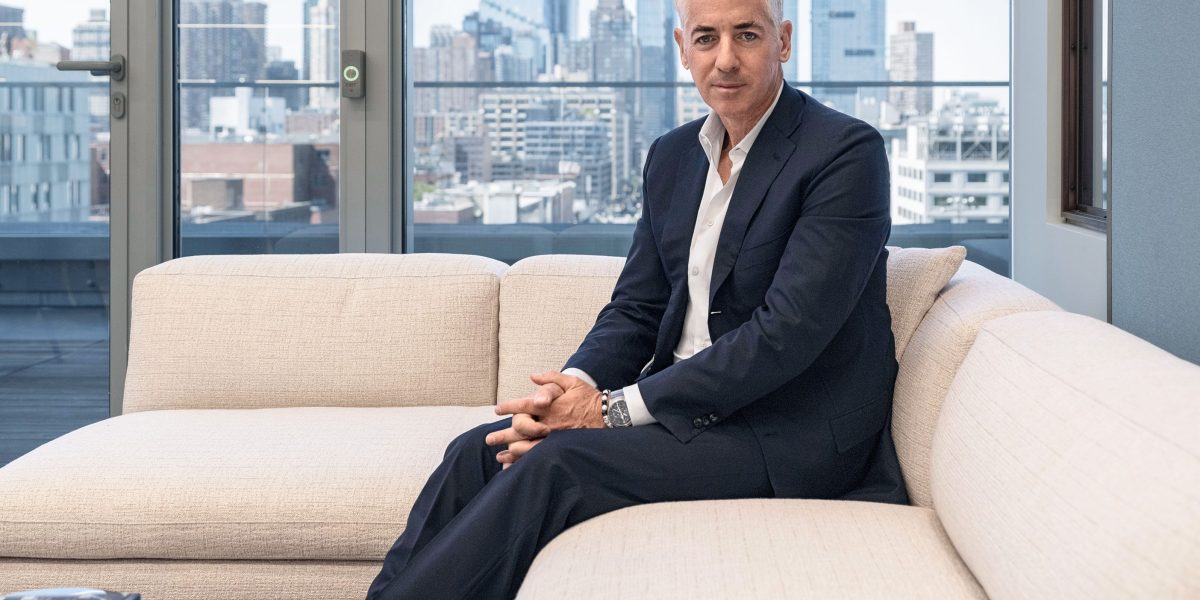
Ackman also used the interview to criticize New York City Mayor Zohran Mamdani's rent-freeze proposals, positioning himself as one of the plan's most prominent critics, according to Fortune. He argued that because roughly half of New York City apartments are rent-stabilized, landlords are forced to raise rents on the other half to cover costs, and that about 60,000 units have been pulled off the market entirely because renovation costs cannot be recovered under current rent regulations. He also pointed to New York State's lengthy pipeline approval process, which he said takes 15 years. Ackman contrasted this with Austin, where he said rents have fallen because it is easier to build, and Florida, which he called "an incredibly well-managed state" that recently voted to eliminate real estate taxes. "Watch what happens to New York City if Mamdani succeeds in implementing these plans," Ackman warned, according to Fortune.
AI as the Next Advantage
Looking ahead, Ackman, 60, told Fortune he believes artificial intelligence will become the next major competitive advantage for both companies and individual workers. He said he agreed with Bezos' earlier argument that AI-driven productivity gains could eventually create a labor shortage, calling it a "powerful case" for the technology's long-term impact. Ackman said AI is already making expert-level knowledge accessible to anyone, particularly in fields like education and healthcare. "This is the era in which you can learn anything, and you don't actually have to read books now," he said. "We're in a world in which intelligence, very high level of intelligence, is available basically for free. It's a pretty amazing world."
What To Watch Next
As Pershing Square continues to expand its footprint, attention is likely to turn to how the Brain Research Rehabilitation Institute performs as a test case for Ackman's hybrid nonprofit-for-profit model, and whether his predictions about New York City's rental market play out under Mayor Mamdani's proposed policies. Ackman's comments on employee ownership, capitalism, and AI suggest his influence will continue to extend well beyond his hedge fund's investment portfolio.


